Ticks and fleas keep to the same edges as mosquitoes
The parts of a garden a dog uses most are usually the parts nobody treats.
September 1, 2026 · 4 min read
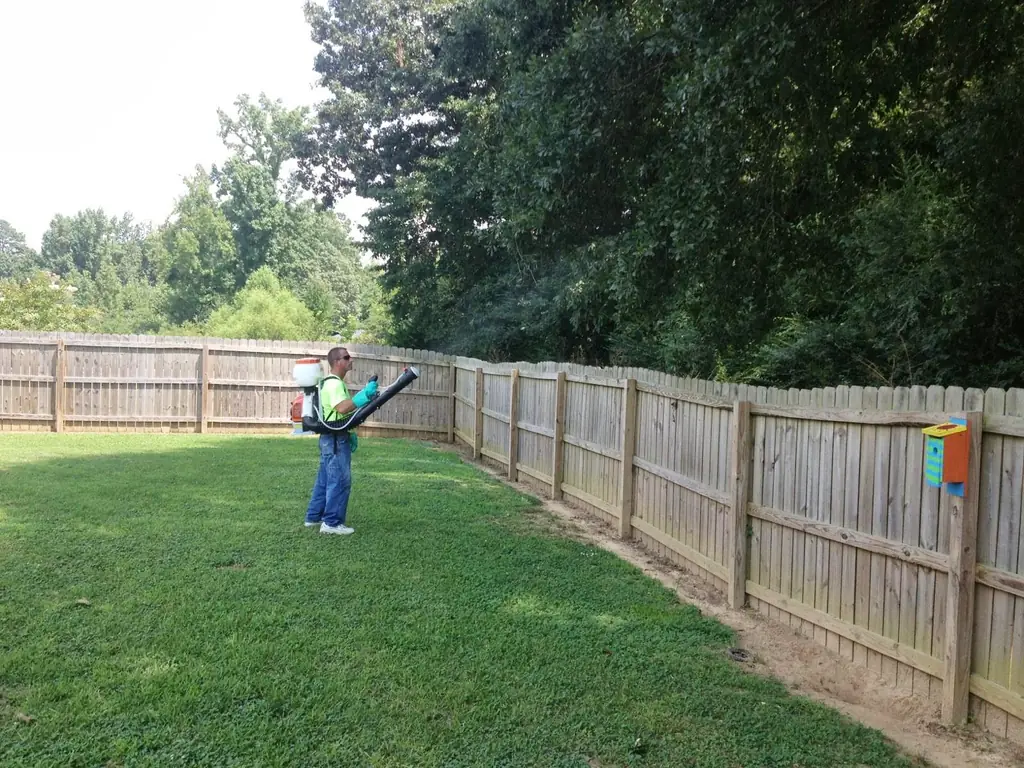
People tend to think of mosquitoes, ticks and fleas as three separate problems with three separate solutions. In terms of biology that is fair enough. In terms of where they live on a property it is not, and that has a practical consequence worth knowing about.
All three keep to the same edges of a garden. Shaded, humid, undisturbed growth at the boundary. Which means the walk that treats one can treat all three.
How a tick actually finds you
Ticks do not chase anything. They climb to the tip of a low piece of vegetation, extend their front legs, and wait for something warm to brush past. It is a strategy that only works in places where things brush past, which is why ticks concentrate along paths through long grass, at the margins of a lawn, along fence lines and at the edge of a treeline.
That behaviour also explains why the middle of a mown lawn is comparatively low risk and the strip of unkempt growth around it is not. A tick on a short, sunny, regularly cut surface dries out and has nothing to climb. The boundary gives it both height and humidity.
Fleas hold in the same layer
Flea larvae are vulnerable to sunlight and dryness, so they develop in the shaded, humid layer at ground level rather than out in the open. Under decking, in the mulch of a planting bed, in the shaded strip against the house, in the leaf litter at the base of a hedge.
If a household has a flea problem indoors, there is very often a reservoir outside in exactly those places, and treating only the inside of the house leaves the animal walking back through it every day.
Why this is sold as an add on
Because the walk is the same walk. A technician treating the harborage at the boundary for mosquitoes is already covering the fence line, the treeline, the margins and the beds against the wall. Adding tick and flea treatment to that visit is a different material worked into ground that is already being covered, which is why it costs a fraction of what a separate call out would.
It can be added to the Barrier Shield program, to the organic program, or to a one off event treatment. It is not usually worth buying on its own, and we will say so.
The question people actually want answered
Households with children and animals on the lawn ask harder questions about tick and flea treatment than about anything else, and they are right to. The honest answer we can give is what the material is built on: the same active ingredient found in doctor prescribed and veterinarian approved lice shampoos for humans and pets, at a milder concentration than those products use.
That is a useful reference point precisely because it is a product people already make a considered decision about for their own children. It is not a claim that anything can be sprayed anywhere without thought, and if you have specific concerns about a pet's health the conversation to have is with your vet as well as with us.
Checking after time at the boundary
Because ticks attach rather than bite and leave, the habit that matters most is checking, and the places worth checking are the ones that are warm and covered. On a dog that means behind the ears, around the collar line, between the toes and in the armpits. On people it means the hairline, behind the knees and around the waistband.
The useful moment to do it is after anybody has been in the parts of the garden ticks actually occupy, which is the boundary rather than the lawn. Children who have been playing in long grass at the margins and a dog that has spent an afternoon nosing along a fence line are the two cases worth being routine about. Treatment reduces how many are out there to find; checking is what deals with the ones that are.
What you can do at the boundary yourself
Treatment works better on a property where the habitat has been made less comfortable, and some of that is ordinary maintenance.
- Keep grass at the margins cut rather than letting a fringe develop along fences
- Clear leaf litter from the base of hedges and from shaded beds
- Keep the strip immediately around decking and the house wall tidy and open
- Cut back growth that overhangs a path the dog uses every day
- Give a regularly used run more sun and less permanent shade where you can
None of that replaces treatment, and none of it is possible everywhere. A treeline is a treeline. But the combination of a less hospitable boundary and a treated one is a great deal more effective than either by itself, and it means the parts of the garden the animals actually use are the parts getting attention.
Superior Mosquito Defense — (256) 795-3368
Call (256) 795-3368More articles
Why the mosquitoes in your yard bite in the middle of the day
If you have given up on the garden at two in the afternoon rather than at sunset, there is a reason for it.
The teaspoon problem: where mosquitoes actually breed in your yard
Almost every garden has more standing water in it than the owner thinks, and most of it is not the pond.