The teaspoon problem: where mosquitoes actually breed in your yard
Almost every garden has more standing water in it than the owner thinks, and most of it is not the pond.
September 1, 2026 · 4 min read
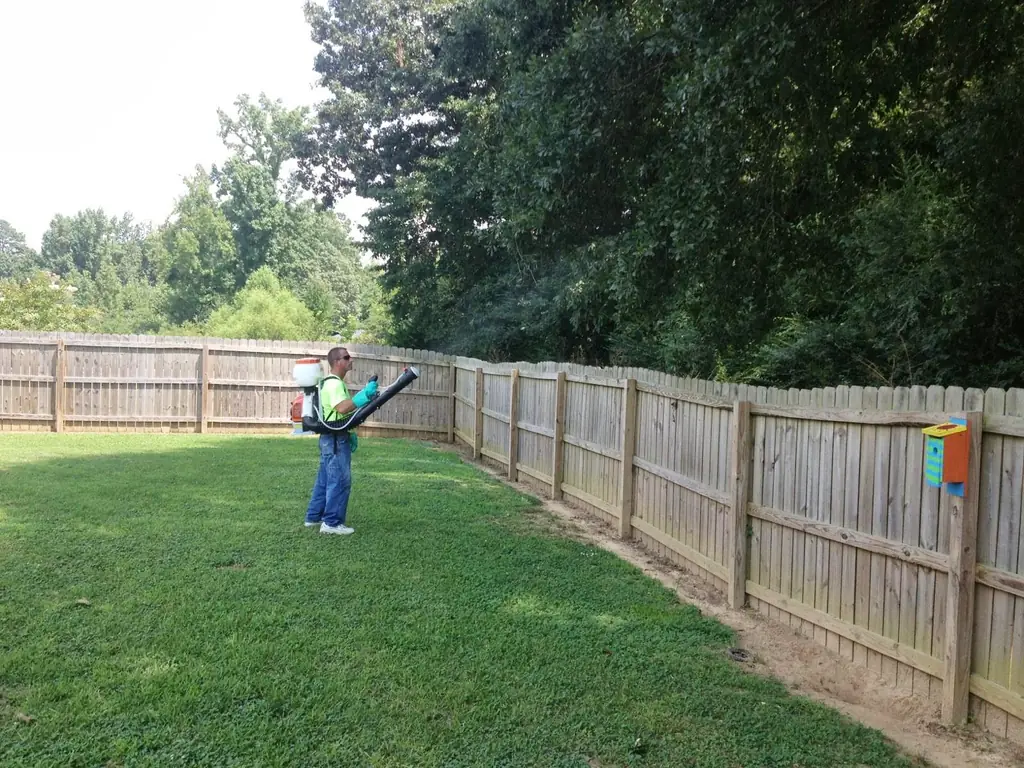
When people think about standing water they picture something substantial. A pond, a water butt with the lid off, a drainage ditch at the end of the plot. Those matter. But they are rarely the reason a garden keeps producing mosquitoes week after week, because they are obvious enough that most homeowners have already dealt with them.
Mosquitoes can breed in as little as a teaspoon of standing water. Once you take that seriously, the walk around a property looks completely different.
The containers nobody counts
Start with anything that holds a film of water for more than a few days. In a normal northern Alabama garden that list is longer than it sounds.
- Saucers underneath plant pots, especially ones tucked at the back
- Bird baths, which are designed to hold water and rarely emptied on a schedule
- The drip and pooling underneath a cooling system
- Children's toys, buckets, wheelbarrows and anything left the right way up
- Folds and dips in a tarpaulin or a cover over furniture
- Blocked gutters, which hold water along their whole length out of sight
- The rim and base of a plant pot that has sunk slightly into a bed
None of these look like a mosquito problem. Collectively they can out produce anything else on the property, because they are warm, shallow, undisturbed and free of anything that would eat a larva.
The low spot that never quite drains
The other category is ground rather than containers. Most gardens have somewhere that stays wet for days after a storm. Behind a shed, along a fence line where the ground has compacted, a hollow in the lawn, the shaded strip at the bottom of a slope where the sun never gets to it.
These are harder to deal with than a bird bath because you cannot tip them out. Sometimes the answer is drainage or regrading, which is a landscaping job rather than a pest control one. More often the practical answer is treating the water itself so that whatever hatches there does not survive to fly.
Why treating water beats treating air
Larviciding is the least visible part of a mosquito program and usually the most valuable. Treating a breeding site removes a generation before it ever leaves the water. Treating adults removes the ones currently in front of you and does nothing about the next batch coming out of the same puddle a few days later.
This is why our Barrier Shield program opens with larviciding the known breeding grounds on a property rather than with the mist. Biological dunks go into standing water that cannot practically be removed, including bird baths and cooling system drips and the low spots that hold after rain. The mist that follows is doing a different job, and it works far better on a property that is not still manufacturing mosquitoes in the background.
A walk you can do yourself this week
You do not need anyone's help to do the first pass, and it is worth doing whether or not you ever hire a company. Walk the boundary of the property rather than the middle. Look low. Tip out anything that can be tipped, turn over anything that can be turned, and make a note of the places that hold water and cannot be moved.
Do it again after the next heavy rain, because the map changes. Water finds places in a wet week that a dry week will not show you, and those are exactly the sites that matter in the weeks afterwards.
Gutters deserve their own paragraph
Of everything on the list, blocked guttering is the one most likely to be producing mosquitoes at scale without anybody suspecting it. A gutter with a build up of leaf litter does not drain, it ponds, and it does so along its whole length several feet above head height where nobody ever looks. It is warm, sheltered from wind, and completely undisturbed.
It is also the source people are least able to inspect casually, which is part of why it persists. If your gutters have not been cleared for a season or two and you have a mosquito problem you cannot otherwise explain, that is a reasonable place to look before assuming the issue is coming from somewhere in the garden at all.
What is left over
There will be some. Gutters you cannot easily reach, a neighbour's garden backing onto yours, a drainage feature that is meant to hold water, a treeline where the ground stays damp all season. That residue is the honest case for a recurring treatment rather than a one off tidy up, because those sites keep working whether or not you have dealt with everything on your own side of the fence.
The point of the walk is not to eliminate every source. It is to stop paying for treatment of a population that your own garden is quietly rebuilding every week.
Superior Mosquito Defense — (256) 795-3368
Call (256) 795-3368More articles
Why the mosquitoes in your yard bite in the middle of the day
If you have given up on the garden at two in the afternoon rather than at sunset, there is a reason for it.
What a 21 to 25 day mosquito barrier actually does between visits
The number on the program is not marketing. It is roughly how long the treatment keeps doing its job in Alabama heat.